THE FIRST HOUSES
Plots had been purchased and so building began. The first properties can be dated relatively easily within a five year timescale of 1906 to 1911. The OS Map dated 1912 shows the fifteen properties that had been built in Yew Tree Road, four properties in Cramhurst Lane and four properties in Gasden Lane.

It is likely that the first properties to be built were those in Gasden Lane.

Probably the earliest properties to be built in the road can be dated to 1906. There were two substantially built detached houses with some similarities in style.
Rose Cottage originally called Ashington Villa (number 17) was owned by Frederick Lednor and rented by John Hill.
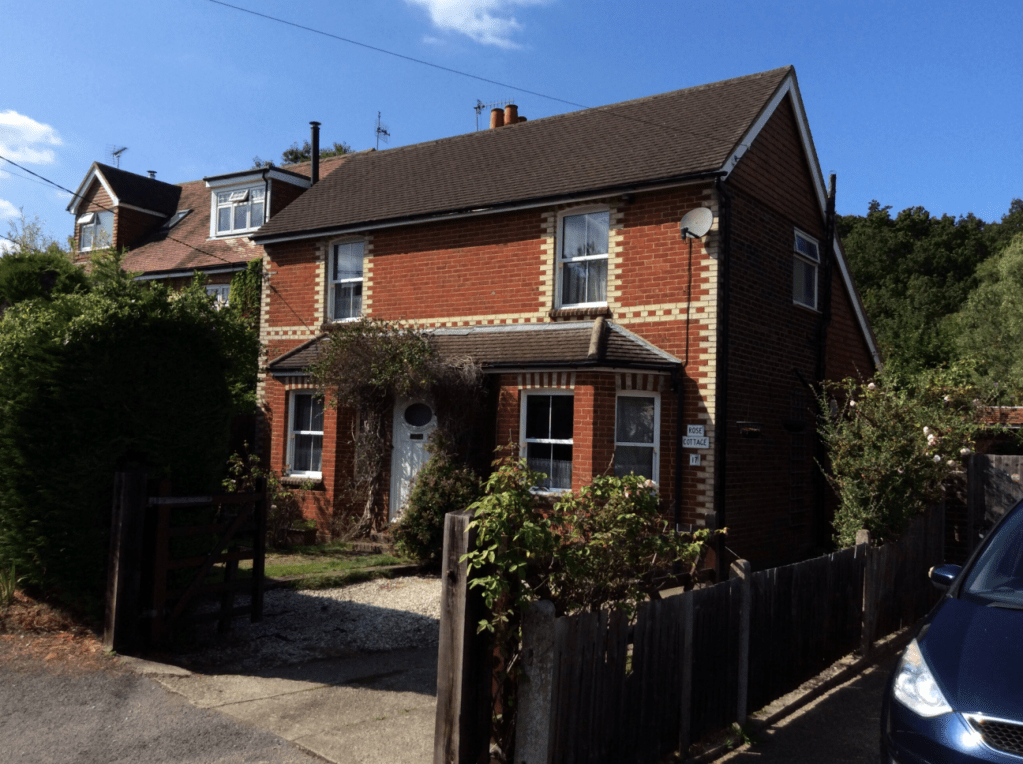

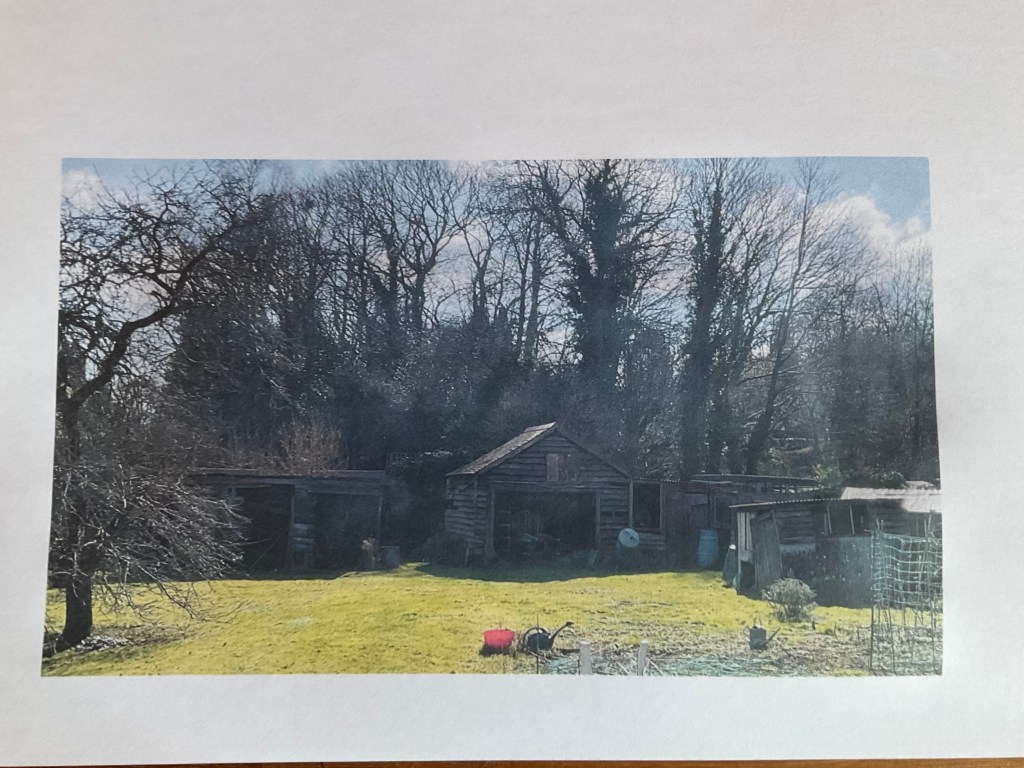
The plot for Waverley was acquired in 1906 and the house built shortly afterwards. There were also apparently (looking at their size, nature and appearance) wooden stables and a coach house built at the rear.
The only other detached property (at that time) was the single dwelling called Cyprus (number 14).
The pair of semis, Alma and Kentville (20 & 22), were built in 1907 by Henry Heather following his purchase of the plot on 4 April that year. The houses show some characteristics of style and material to Ashington Villa and Waverley.
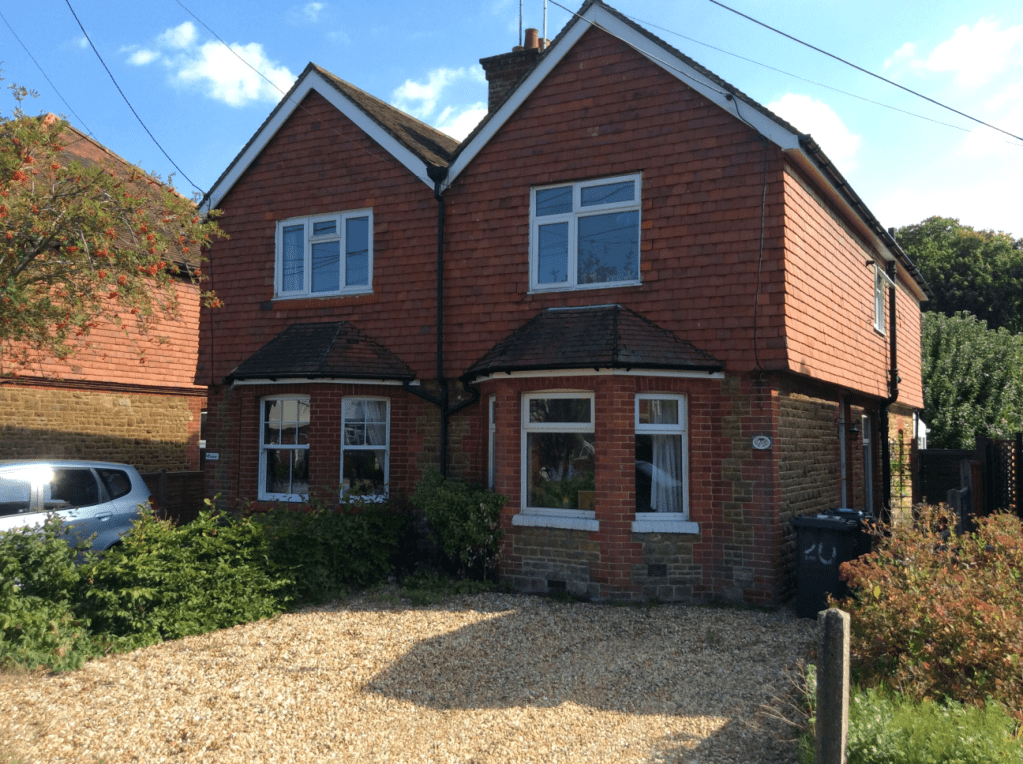
The remaining properties are built in pairs on a single plot.
Numbers 34/36 were built in 1908 by a local builder George Nash who lived at Cleveland (34) and probably rented out Helmeih (36). There is a mortgage deed for that date which details that he raised £340 to finance the purchase of the plot number and to build the properties.

It is likely that the same builder (Nash) built the two pairs of semi-detached properties in Cramhurst Lane as they appear to be of the same age and same design. Their plots formed part of the original layout and had been sold by 1911.
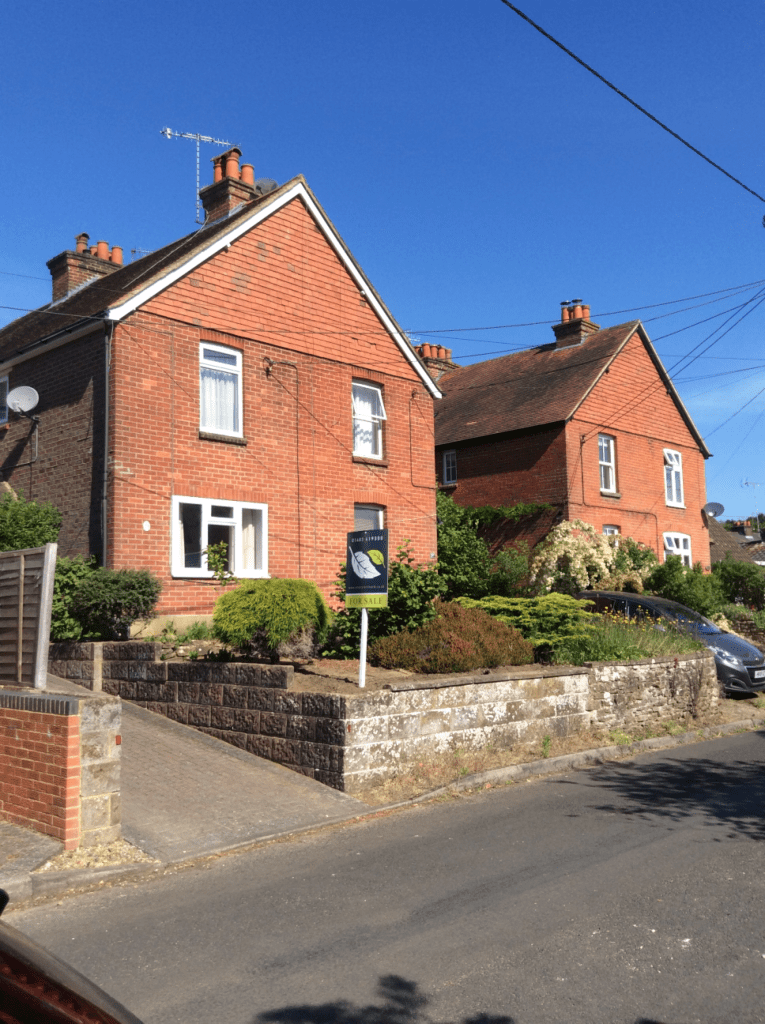
Other properties included the pair of semis Stoatley and Oakhurst (23 & 25)

And the pair of Werled and Ledwer (29 & 31)

On the 1912 Electoral Register, Ledwer is shown as occupied by Alfred Bowler.
THE NEXT DEVELOPMENTS
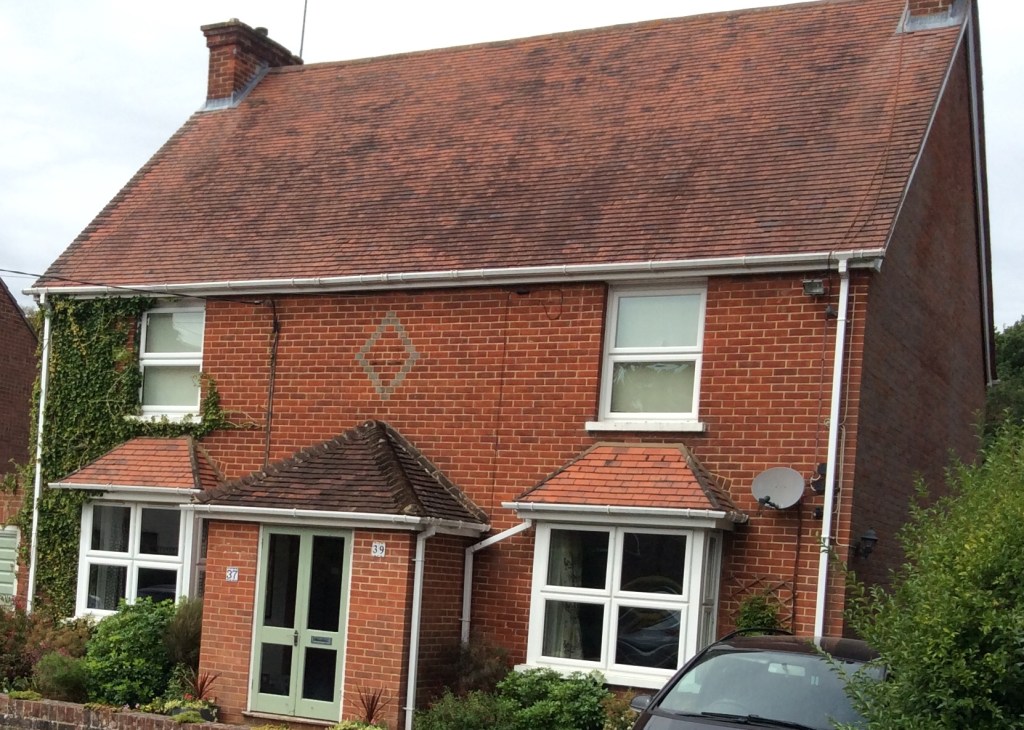
The Pines (37 & 39) were built by George and Mary Baker who moved from their public house in Blackheath
Firglen (11 & 15) was built in 1911 as the date is shown on the front wall of this pair of semis

The pair of semis, Velhurst and Shrewsbury (30 & 32), were built in 1913 as evidenced by their inclusion on the 1916 OS Map and the occupation of Velhurst by Alfred Edwards as shown on the 1913 Electoral Register

THE DIVISION OF THE VACANT PLOTS
By 1910, most of the plots had been sold. The original developer of the land, George Tickner died on 15 October 1907 and his wife died on 13 February 1908. They owned the plots that had not been sold. As they had no children, their wills left these plots to various relatives. These remaining 14 plots were divided between the relatives on 31 August 1910.
Mary Ann Lemon and Elsie Elizabeth Buckingham shared plots 10 and 11 (Numbers 8, 10 & 12), Thomas Madgwick got plots 19, 20 and 26 (Numbers 38, 40, 48 & 50), Henry Frank Magwick got plots 21, 24 and 25 (Numbers 42, 44 & 46 ), Elsie Elizabeth Buckingham got plots 27, 28 and 29 ( approximately Numbers 54 to 58) and Mary Ann Lemon got plots 30, 31 and 32 (approximately Numbers 60 to 66).
It is interesting to note that at 1910 the sum of £600 was left on the original mortgage sum of £1547 although there had been some interest to pay. At that time, some 35 plots had been sold. Typical of the original sale value is Plot 13 (now numbers 18 & 20) which was sold on 26 June 1906 for £40 to Frank Lindsey a plumber who lived at Ockford Road Godalming. He sold this plot to William Barker on 9 May 1934 for £57. So there was no great increase in value over those years.
THE FIRST RESIDENTS
There are two basic sources that show who lived in the road in 1911. There is the Census of 1911 which shows all of the residents and the Electoral Registers which show only those entitled to vote. Neither source actually identifies the property in which any named individual lived.
The 1911 Census shows eleven households in the road although there were fifteen dwellings shown on the 1912 O.S. Map. It may be that some properties were unoccupied and others perhaps like Firglen and The Pines that we’re in the course of construction.
| NAME | AGE | STATUS | OCCUPATION | BIRTH PLACE |
| Alfred Bowler | 48 | Head | Carpenter | Witley |
| Clara Bowler | 42 | Wife | Witley | |
| Ada Bowler | 21 | Daughter | Witley | |
| Sidney Bowler | 7 | Son | Witley | |
| Arthur Bowler | 4 | Son | Witley | |
| Harry Bowler | 20 mths | Son | Witley | |
| John Harris | 50 | Head | District Council Labourer | Elstead |
| Harriet Harris | 43 | Wife | Parlour Maid/Domestic | Chiddingfold |
| Emily Winifred Warren | 20 | Stepdaughter | Thursley | |
| James Herrington | 77 | Father-in-law | Petworth | |
| John Hill | 49 | Head | Boot Repairer (at home) | Cheshunt Herts |
| Rosina Hill | 53 | Wife | Laundress (at home) | Witley |
| Samuel Lawrence | 31 | Head | Farm Labourer | Witley |
| Ada Lawrence | 27 | Wife | Battersea | |
| Ivy Lawrence | 6 | Daughter | Wandsworth | |
| Gladys Lawrence | 3 | Daughter | Wandsworth | |
| Constance Lawrence | 10 mths | Daughter | Milford | |
| Alfred Smith | 31 | Farm Labourer | ||
| Rosetta Lillywhite | 59 | Widow | Laundress | Hersham Surrey |
| Charles Lillywhite | 22 | Son | Motor mechanic | Hambledon |
| Jethro Cooks | 16 | Grandson | Works at home | Rusper |
| George Nash | 54 | Head | Stone Dresser | Godalming |
| Elizabeth Nash | 55 | Wife | Godalming | |
| George Nash | 27 | Son | Bricklayer | Godalming |
| Henry Nash | 22 | Son | Bricklayer | Witley |
| James Nash | 20 | Son | Gardener/Domestic | Witley |
| Arthur Nash | 17 | Son | General Labourer | Witley |
| Ada Nash | 14 | Daughter | Witley | |
| Harry Ragless | 28 | Head | Coachman/Domestic | Haslemere |
| Phoebe Ragless | 31 | Wife | Kidderminster | |
| William Thompson | 35 | Head | General Shopkeeper (on own account at home)/Carman | Gosport |
| Margaret Thompson | 30 | Wife | Witley | |
| William Thompson | 5 | Son | Milford | |
| Marjorie Thompson | 4 | Daughter | Elstead | |
| Lilian Thompson | 1 | Daughter | Milford | |
| John Ernest Lawrence | 29 | Boarder | Builder’s Labourer | Witley |
| James Wigg | 53 | Head | Farm Labourer | Hants |
| Henrietta Wigg | 58 | Wife | Southampton | |
The Electoral Register will only show some people in the relevant houses. There were property qualifications which meant that whether freeholder, leaseholder or occupier e.g. paying rent, the value of their interest had to be a minimum of £10 per year. Women were excluded. Registers were compiled as drafts in July of the previous year meaning that any particular date may not show a current occupier. Additionally, Registers were compiled in alphabetical order by Parish and many people declared to an area rather than a particular road and even then there were no house names or road numbers.
Looking at the Electoral Registers for the period from 1909 to 1914, there is a signicant turnover of names which is not surprising as the occupation of most of the people named on the Census as either general labourer or other basic work and given that most properties were rented on a weekly basis. It makes allocation of names to properties very difficult.
However, looking at later Electoral Registers where names are identified against properties and assuming people did not change properties in the road, it is possible to put some names to some properties.
The Hill family were at Ashington Villa (17) until 1930’s, the Bowler family lived at Ledwer (31) until 1950’s and the Farr family occupied Firglen (11/15) until 1960’s. The Nash family owned Cleveland and Helmeih (34/36) and members of their family lived in one or other house until 1950’s. The Baker family and their descendants owned The Pines (37/39) and lived there until beyond the end of the century.
)
.
 Yew Tree Road Witley History