The period between the Wars 1919 to 1939 saw a significant increase in the number of properties constructed in the road and a corresponding increase in the number of residents although it was not until the 1930’s that nearly all of the developments occurred.
EL-ARISH
The earliest development after the Great War was number 46. George and Ted Baker built the original El-Arish in 1918 from materials allegedly from the Canadian camp on Witley common. It was called ‘El-Arish’ after a place in Egypt (now on its border with Israel) where Ted’s brother had been killed in the War. This property has a covenant on its title forbidding the use of the name for the house as Ted Baker moved in 1925 into his parents’ house at Number 37 and he took the name with him to his new home. See under FAMILIES (Baker) for more of the history of this family. The property was altered in the early 1970’s by David White to produce the current double front.
CORNHOLME
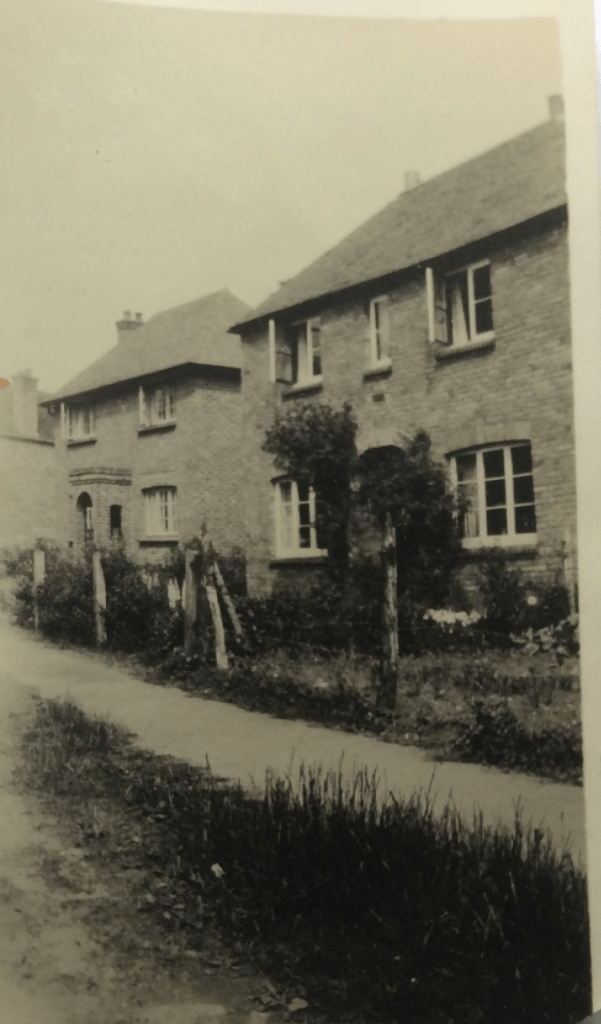
The plot was owned by George Baker until 5 October 1926 when he sold it to Mrs EE Mullard. Plans for the house had been prepared for the builder on 17 August 1926 and construction was completed by 16 November 1928. Mrs Mullard conveyed the property to Mrs. Christian on 14 August 1928. She sold it to Mrs. E. Atkinson on 25 November 1931 who immediately conveyed to Mr. Leonard Dawson on 7 December 1931 for £450.
Mary Rowe found this note under the floorboards showing when the property was completed by the workmen who obviously felt that Mrs. Mullard had not given them their full reward. The date is given as November 16 1928?
This Cottage was Built
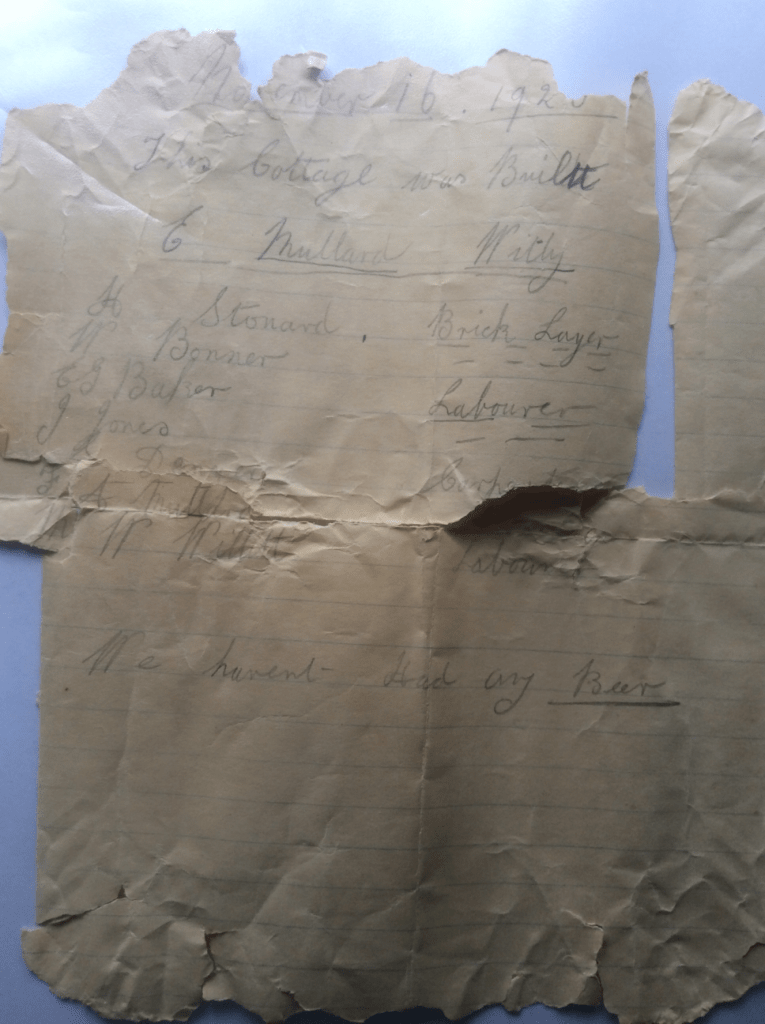
E Mullard Witly
H Stonard Bricklayer
W Bonner. “
E J Baker Labourer
J Jones. “
R Dentry Carpenter
F A Mullard “
W Willitt Labourer
We havent – Had any Beer
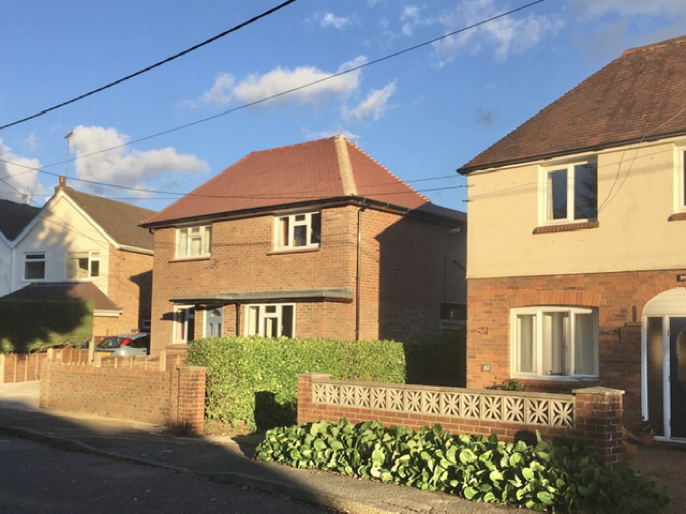
These are pictures of Cornholme, Holmlea and El-Arish as originally constructed. They also show the state of the road at that time. The picture below shows the same properties in 2020.

THE HOUSES BUILT BY THE COUNCIL
In terms of scale, the houses built by the Hambledon Rural District Council 1931/2 were the most apparent. The properties were built on plots 26 to 32 and comprised five pairs of semis (Numbers 48 to 66) and one detached house (Number 68).
The previous sales of the plots and their ultimate sale to the Council give some of the history of these plots, their owners and the prices that were paid. In 1910, these plots were inherited by the relatives of the original developer, George Tickner, and they had subsequently sold them.
Plot 26 was sold by Thomas Madgwick to HR Owtram on 5 December 1910 for £20, then to Agnes Madgwick on 24 November 1919, then to George Dunce on 21 October 1921 for £25 and finally to Hambledon Rural District Council on 28 March 1931 for £75. Plots 27, 28, 29, 30 and 31 were sold to Henry Frank Madgwick on 12 February 1920 for £55 and then by him to Leonard Davis on 20 May 1920 for £100 and then by him to Amos Tanner on 12 March 1929 for £95. Amos Tanner sells plot 31 to Frederick George Neller on 16 May 1929 for £60 and he sells the plot to Hambledon RDC on 3 March 1931 for £70. Amos Tanner sells plots 27, 28, 29 and 30 to Hambledon RDC on 3 March 1930 for £280. Plot 32 is sold on 4 March 1911 to Phoebe Ann Purdy and is eventually acquired in 1931 by Hambledon RDC.

OTHER DEVELOPMENTS
All of the houses (numbers 38 to 46) immediately adjacent to the Council properties were built at this time.
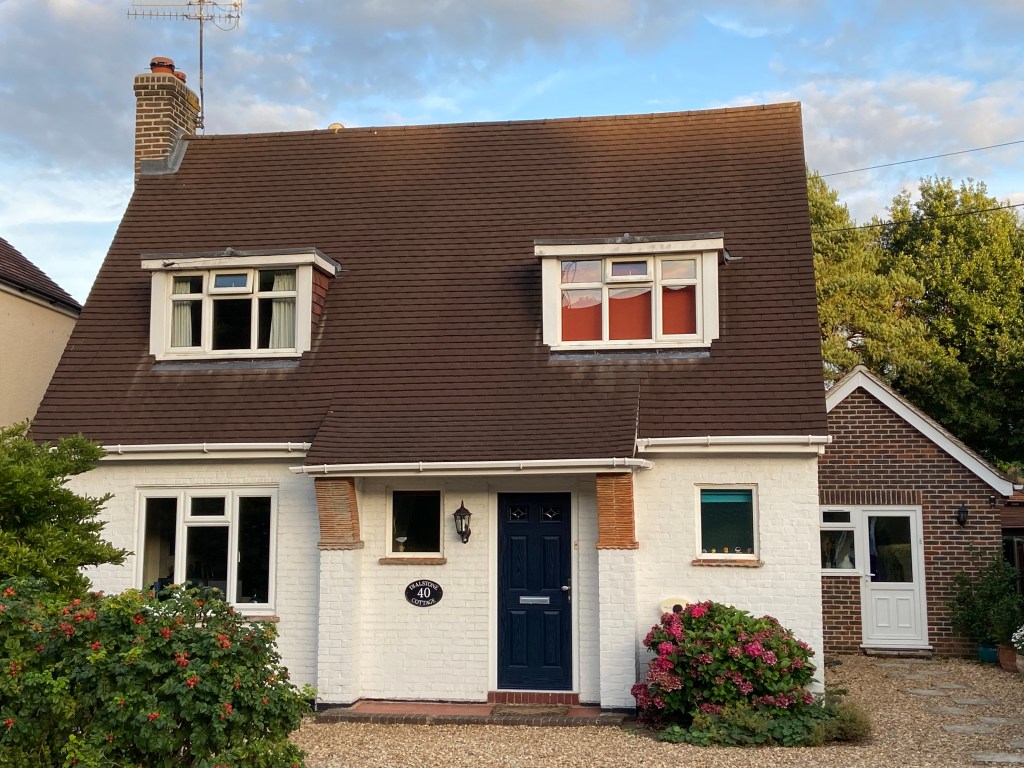
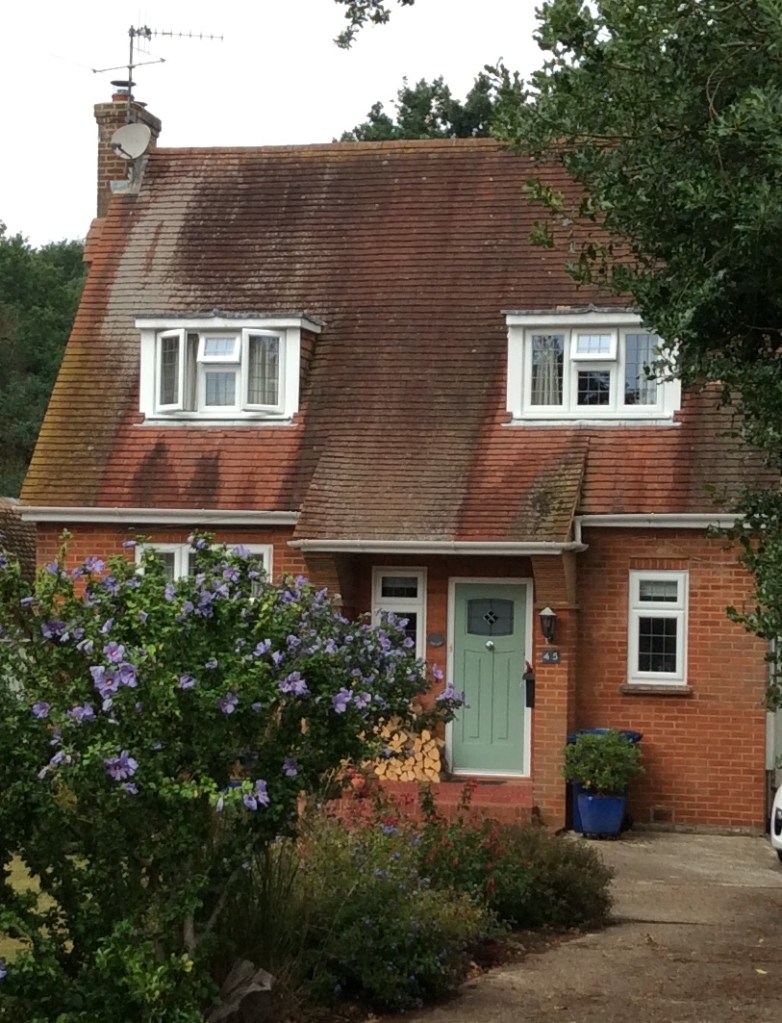
In the early 1930’s Fred Neller built Heath Cottage, Fernden Cottage and The Yews (Numbers 38, 40 and 45) using the same design plan.
.
Brystone (number 43) was built by 1934.
At this time, there was a timber shop run by a Mr. Forth on the site of what are now the Wey House flats.
THE BARKER DEVELOPMENTS
William Barker was a builder and lived at Waverley (number 24) from 1922. Between 1936 and 1939, he built a number of properties in the road with many of them eventually occupied by his daughters and their families. See more about them under FAMILIES.
He built Dawney (number 8) named after Dawney Bottom.
He built the pair of semis Wingrove and Farleigh (Numbers 10 & 12). Wingrove was his wife’s maiden name.

He also constructed Oakhanger and Willmar (numbers 16 & 18) named respectively for the location of his builder’s yard and a combination of his and his wife’s first names.

WAVERLEY STORES
William Barker also built Ano (number 28) originally as a shop.
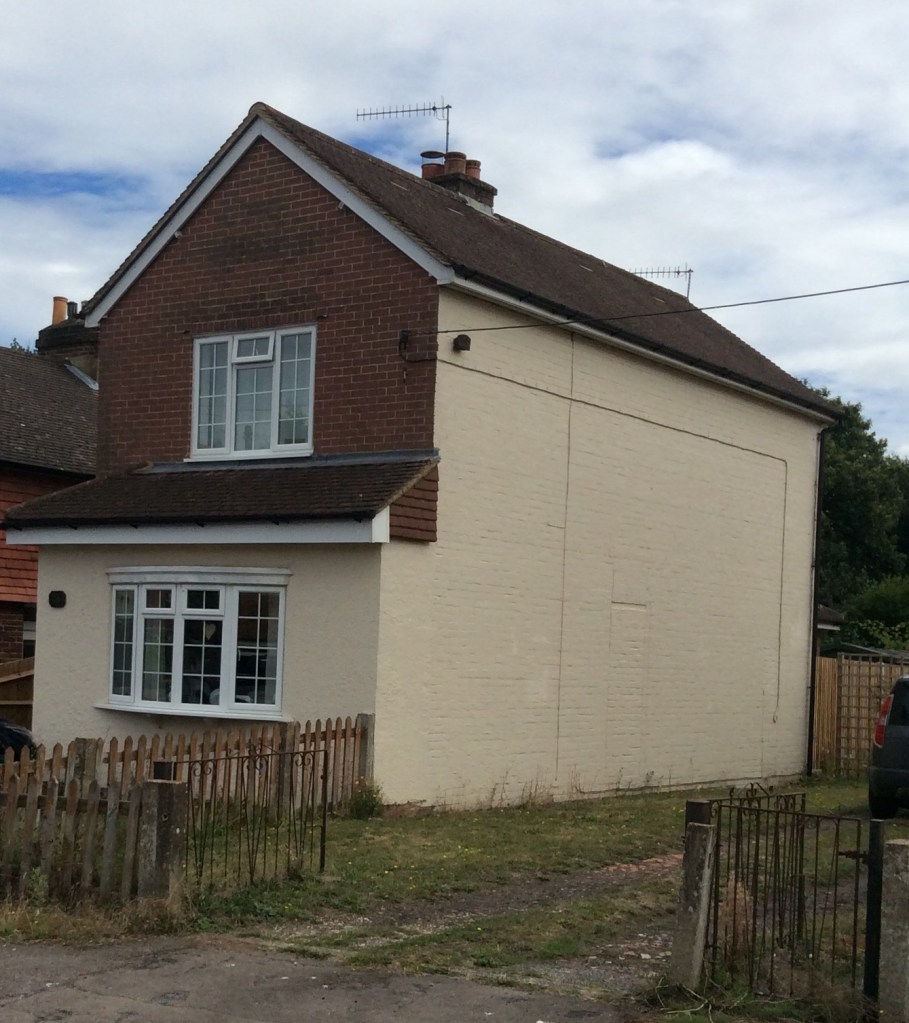
The shop known as Waverley Stores was built by William Barker in the mid-1930’s. It had a large plate-glass window at the front with a shop door to the right, with a counter inside and a store behind and with accommodation upstairs. It was run as a general store/grocers by Mr. Barker with help of his family until 1960’s when Mr. Lockett took over. Then Mr. Lockett’s daughter, Hazel Stay, took over with her husband. Then it was Mr & Mrs. Williams and then a widow with a daughter who married Malcolm, son of Dorothy and grandson of William Barker. It was converted to residential use in the 1970’s.
For more about the shop – see FAMILIES especially Monger and Davies.
THREE BUNGALOWS
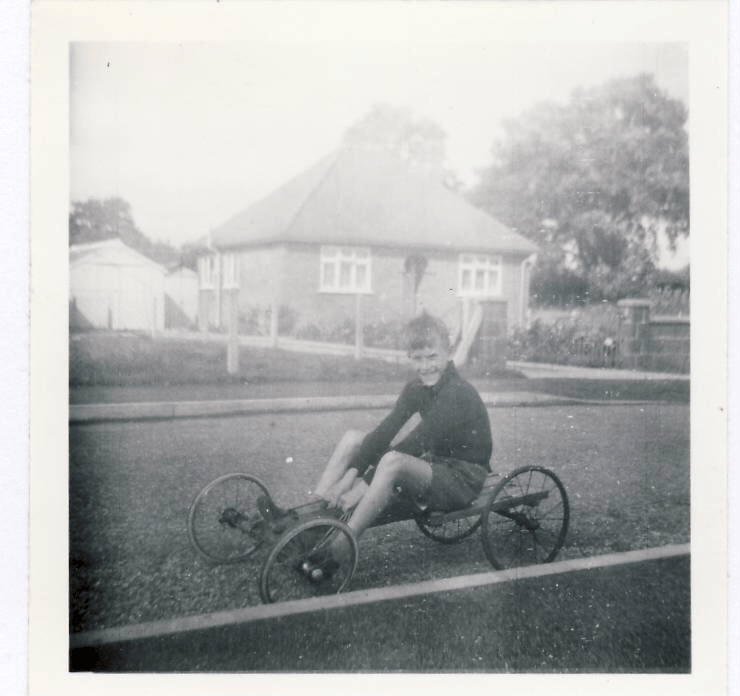
In 1938/39, three bungalows were built called initially and unimaginatively, 1 Bungalows, 2 Bungalows and The Bungalow. 1 Bungalows became Eltham Cottage (number 55) which was demolished in 2005 and replaced by a pair of semis (numbers 55 & 55a). 2 Bungalows (number 57) had a storey added to become a house in 2012. The Bungalow (number 63) is the property on the corner with Cramhurst Lane.

PEOPLE
The Census for 1921 shows all of the residents of the road and details of their date of birth, age, birth place and occupation (were given). Most of the adult men are labourers but some have a trade. All of the adult women are shown as having home duties. Overwhelmingly, the residents are born locally.
| Current House no | Names of occupants | Relationship | Birth year + age | Birth place | Occupation |
| 39 | John Joyce Norah Joyce Josephine Joyce Edward Joyce | Head Wife Daughter Son | 1991+30 1888+33 1915+6 1917+4 | Mayo Ireland Caterham Surrey Caterham Surrey Essex | Grocersassistant Home Duties |
| 37 | George Edward Baker Mary Ann Baker Edward George Baker | Head Wife Son | 1867+54 1868+52 1894+27 | Lanton Northumberland Witley Surrey Witley Surrey | Carpenter – own account Home Duties Carpenter – ass. Father |
| 31 | Alfred Bowler Clara Bowler Sidney Bowler Harry Bowler | Head Wife Son Son | 1862+58 1868+52 1904+16 1909+11 | Witley Surrey Witley Surrey Witley Surrey Witley Surrey | Carpenter Home Duties Labourer |
| 29 | David Young Mary Ann Young | Head Wife | 1849+72 1863+58 | Surrey Surrey | Labourer Home Duties |
| Florence Edith Pride William George Pride Jack Pride Cyril Pride Stanley Pride Richard Pride Norman Pride | Head Son Son Son Son Son Son | 1887+43 1912+8 1914+7 1915+5 1917+4 1919+2 1921 | Halstead Essex Hammersmith London Milford Surrey Milford Surrey Milford Surrey Milford Surrey Milford Surrey | Home Duties | |
| 25 | James Belton Caron Hapelbethie Belton Gilbert Belton Wilfred Belton Gerald Belton | Head Wife Son Son Son | 1873+48 1872+49 1906+14 1911+10 1914+6 | Hampshire Thursley Surrey Farncombe Surrey Farncombe Surrey Milford Surrey | Painter Out of work |
| George Walter Gale Mary Ann Gale James Walter Gale | Head Wife Son | 1867+54 1874+47 1910+11 | Fernhurst Sussex Shottermill Surrey | General Labourer Home Duties | |
| 17 | Frank Hill Emily Hill Rosina Hill Harry Penn | Head Wife Mother Boarder | 1888+33 1894+27 1857+64 1870+50 | Witley Surrey Chertsey Surrey Witley Surrey Sheet Hampshire | Brick layer labourer Home Duties Home Duties Brick layer |
| 15 | George Bridger Mary Bridger Arthur Bridger Frederick Bridger Sidney Bridger Cyril Bridger Reginald Bridger | Head Wife Son Son Son Son Grandson | 1861+59 1861+59 1905+15 1908+13 1910+10 1912+8 1917+4 | Harting Sussex Chichester Sussex Petersfield Hampshire Petersfield Hampshire Liss Hampshire Milford Surrey Liss Hampshire | General Labourer Housewife Assisting father |
| 11 | James Farr Isabel Farr Frederick Raymond Farr Olive May Farr | Head Wife Son Daughter | 1886+34 1888+33 1913+7 1929+1 | Witley Surrey Berkshire Milford Surrey Milford Surrey | House Decorator Home Duties |
| 11 | Rebecca Farr Annie Farr Emma Rebecca Farr Alfred Farr | Head Daughter Daughter Son | 1860+60 1888+32 1890+30 1893+28 | Reigate Surrey Witley Surrey Witley Surrey Witley Surrey | Home Duties Daily Work Daily Work Painter |
| 22 | William John Blake Feadore Annie Blake Frederick William Blake George Henry Blake Arthur Frank Blake Alfred John Blake John Puffett Minnie Puffett | Head Wife Son Son Son Son Visitor Visitor | 1873+48 1873+47 1900+21 1907+14 1910+10 1915+5 1890+31 1889+31 | Croydon Surrey Milford Surrey Milford Surrey Milford Surrey Milford Surrey Milford Surrey Walthamstow Essex Barking Essex | Road Labourer Domestic Duties Builders Labourer Learner Carpenter Domestic Duties |
| 30 | John Edwards Edith Edwards Charles Edwards Jack Edwards | Head Wife Son Son | 1893+28 1890+30 1916+4 1920+1 | Milford Surrey Reading Berkshire Godalming Surrey Milford Surrey | |
| Frederick Croft Alise Croft Edna Marian Croft Phyllis May Croft Frederick Walter Croft | Head Wife Daughter Daughter Son | 1886+34 1888+32 1916+4 1919+1 1921 | Chertsey Surrey Not Known Guildford Surrey Hambledon Surrey Hambledon Surrey | ||
| Arthur Hine Edith Hine | Head Wife | 1892+29 1892+28 | Milford Surrey Cranleigh Surrey | General Labourer | |
| 34 | Henry Nash Elsie Nash | Head Wife | 1888+33 1886+35 | Witley Surrey Hartfield Sussex | Bricklayer |
The Electoral Registers now begin to show all of the adult residents of the road following the enfranchisement of adults particularly women. See under TABLE.
Additionally, the outbreak of the Second World War triggered legislation by the Government which now provides considerable information about the people resident in the road in 1939. See National Register under TABLE.
The National Registration Act 1939 required all households to provide details of all occupants – name, sex, date of birth, marital status, occupation and any membership of the armed forces. So the Register provided information of everyone (including children) who lived in the road and where they lived. Subsequently, the information was used for official purposes including the issue of identity cards and ration books.
This Register is currently accessible except that anyone still living has been redacted. Nevertheless the information is considerably helps in showing the properties then built and the families and occupations.
The 1939 Register shows exactly all the properties then built in the road. The extracts also include the properties round the corner in Gasden Lane. Although some names are redacted because they are now still living, the Register reveals the names and details of everyone who lived in the road. Indeed, some of the redacted names can be guessed as their names then appear on the 1945 or on later Electoral Registers.
Some properties are owner occupied but many are rented. All of the properties built by the Council are rented and others are likely rented given the nature of the occupation by their main residents. There are a significant number of ‘labourers’ mostly in agricultural or similar work. There are only a couple of retired residents and a few managers, skilled artisans and people in business. Very few women are in employment nearly all have their occupation as ‘unpaid domestic duties’.
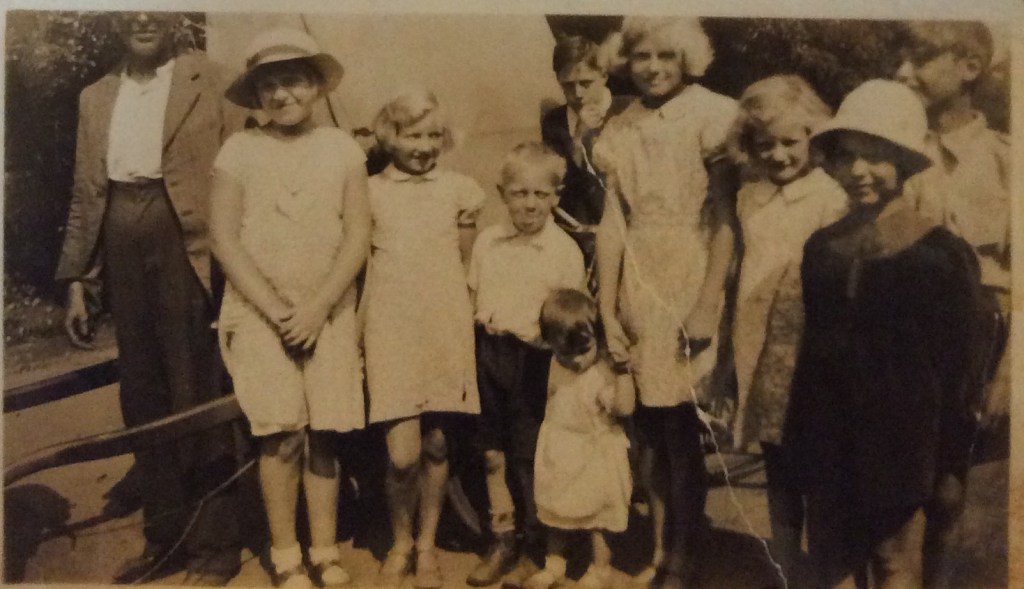
Children were also more prominent in the road.
These pictures were taken outside Cornholme. Here is the hurdy-gurdy man entertaining the children. The bottom picture features Mary aged 2/3 together with Alan Coombes aged 7/8. Also it looks like the Barker girls possibly Joan, Dorothy and Hilda. Gracie White is on the extreme left in the hat and Mary’s cousin Alan.

The children also feature at the end of the War. Here is the VE Day celebration on what was called Tanner’s field opposite the Council properties. You can see Mary Dawson’s mother (second from the left) and Mary (in front of her and in the hair band). Mrs. Forth is the lady (on the extreme left) who lived at number 64. The boy at the front is named Chitty.

 Yew Tree Road Witley History